Camp III
The ClimbCamp III was Mountain Madness’s high camp on the ice ledges of the Lhotse Face, serving first as a place to acclimatize and prepare the route, then as a staging point for the summit bid. Its tents, oxygen, and fixed ropes were essential infrastructure; the camp’s problems with illness, exhausted Sherpas, and uncertain communication showed how much the expedition’s plans depended on systems that could falter at altitude.
Setting and Acclimatization
The Mountain Madness acclimatization plan treated Camp III as part of a gradual ascent rather than a destination in itself. On the first excursion, clients were to climb to 6,100 meters, where Camp I would be established, then return to Base Camp the same day. On a later rotation, they would spend a night at Camp I and climb to 6,500 meters, the altitude of Camp II, before descending for several days of rest. Throughout, clients carried only personal gear while the climbing Sherpas, working under Lopsang Jangbu Sherpa, transported ropes and supplies.
That staged approach aimed to let climbers adjust to increasing elevations while conserving strength and giving guides repeated chances to assess their condition. Yet Camp III was not merely a waypoint in a carefully controlled schedule. Its steep, high-altitude setting made even a single night consequential: on April 28, Anatoli Boukreev thought one night at that elevation was enough for climbers who had never been there before, and urged clients to descend rather than extend their stay.
Route Work and Logistical Strain
Camp III’s establishment competed with the labor required to prepare the route higher on the mountain. On April 24, the camp was still not in place, while the Sherpas were nearing exhaustion after several consecutive days of work. Boukreev proposed that four Sherpas establish the camp the next day and then descend to rest, but this would leave Mountain Madness unable to contribute Sherpas to a joint effort to fix ropes between Camp III and Camp IV on April 26.
The expeditions had agreed to cooperate on that rope-fixing work, and Mountain Madness did not plan to assign its guides to it. The team chose instead to send Boukreev in place of its Sherpas. Contributing kept the expedition among those positioned to make an early summit attempt, with May 10 circulating as a possible date. Boukreev wanted the route secured before the summit bid, but the assignment also required a day of rest at Camp II and the collection of supplies from the other expeditions.
The camp’s later role in the summit plan depended on a different kind of supply chain: oxygen. By the time the team assembled at Camp IV, Mountain Madness had sixty-two canisters there—nine heavier Zvesda bottles reserved for sleeping and fifty-three Poisk canisters designated for the May 10 climb. The team’s oxygen had already been substantially consumed, especially by Pete Schoening and Ngawang Topche Sherpa. Those figures made Camp III part of a larger logistical sequence: oxygen was carried upward from Camp II toward Camp IV, while the summit team’s margin for delay or a second attempt remained narrow.
Illness and Descent
Camp III exposed differences in how individual climbers were coping with altitude. When Boukreev arrived after scouting a site for Camp IV, five of Scott Fischer’s eight clients had reached the camp: Lene Gammelgaard, Klev Schoening, Martin Adams, Sandy Hill Pittman, and Dale Kruse. They initially seemed strong after climbing from Camp II, but Boukreev knew that a climber’s condition could change quickly at altitude.
On April 28, Gammelgaard had red, inflamed eyes and appeared lethargic, while Kruse seemed markedly worse. Boukreev described him as apathetic, withdrawn, and distant, and pressed the clients to follow Adams down. Kruse’s movement became alarming as he prepared to descend: he was unsteady and struggled to stand. Boukreev feared that if the much larger climber fell, he might not be able to get him safely down to Camp II alone.
Boukreev got Kruse onto the fixed ropes with difficulty. Fischer arrived with Neal Beidleman as the descent began, and Fischer immediately joined Boukreev in assisting him; Beidleman stayed at Camp III to complete an acclimatization overnight. Around 6,900 meters, Kruse began to regain control of his movements. By about 5:00 p.m., after they reached the Western Cwm at the foot of the Lhotse slopes, he seemed back to normal. Boukreev continued downward the next morning with Kruse and Gammelgaard, carefully controlling Kruse’s movements through the route, particularly in the Icefall. The episode made Camp III’s acclimatization purpose inseparable from its role as a place where deteriorating health had to be recognized and acted upon.
Camp Life and the Summit Push
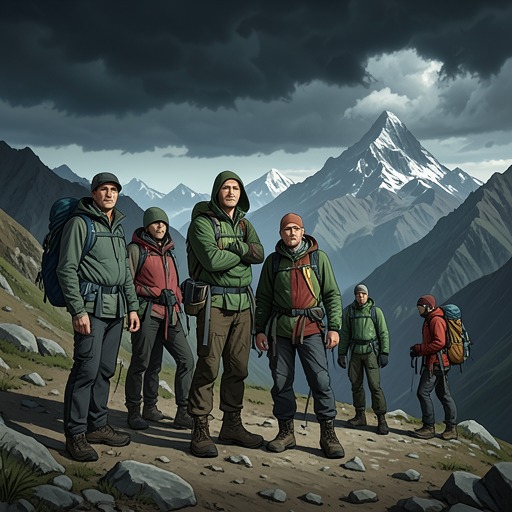
On the night before the summit attempt, the climbers and guides occupied three tents on the ice ledges cut by Boukreev and the Sherpas. Charlotte Fox, Tim Madsen, and Klev Schoening shared one; Fischer, Beidleman, and Pittman another; Boukreev, Gammelgaard, and Adams the third. Boukreev recalled the team as joking and jovial, a moment of apparent ease within an expedition already marked by physical strain and unstable conditions.
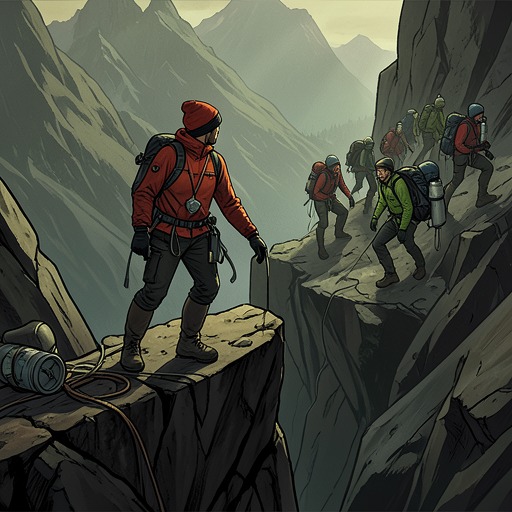
On May 9, the camp’s morning routine was interrupted by news that Chen Yu-Nan of the Taiwanese National Expedition had slipped into a crevasse after leaving his tent without crampons. Sherpas went to help with the extraction. Meanwhile, Fischer and his guides hurried their clients through breakfast and prepared to move toward Camp IV: the clients put on full-body down suits, carried a full Poisk canister in their packs, and arranged their oxygen masks and hoses for use on the climb. Camp III was the point where climbers using oxygen typically began to strap it on for the strenuous ascent over the Yellow Band toward Camp IV.
The summit plan also depended on ropes being fixed ahead of the clients, so they would not have to wait on the route. That expectation was not met: neither Lopsang Jangbu Sherpa nor Ang Dorje Sherpa, nor any other Sherpas, had departed early to fix the ropes. Later accounts differed over whether Lopsang had been told that the ropes were already in place. The discrepancy mattered because the camp was not only a physical staging point; it was where clients’ expectations, Sherpa labor, and the timing of the ascent converged.
Communications and Significance
Mountain Madness’s equipment raised concerns well before the summit push. Martin Adams criticized the expedition’s old two-way radios, describing them as antiquated ten-channel models in contrast to small, simple radios he believed every climber should carry. A radio was supposed to connect Base Camp with climbers on the mountain and convey developing problems, emergencies, equipment needs, weather, and medical information. The weakness of that link became particularly important as the crisis unfolded.
Communications between Dr. Ingrid Hunt at Base Camp and Fischer and Lopsang on the mountain relied on a chain of relays through Sherpas at Camp II and Camp IV. Hunt believed she was not receiving accurate or complete information, and messages were sporadic. She moved between the Mountain Madness and Rob Hall camps because the latter had better communications, repeatedly asking her radio contact for updates. At Camp IV, Boukreev reached the tents without being told of the possibility of an emergency above the Hillary Step; the camp’s radio and message network had not made the developing crisis legible to him.
Camp III thus occupies a double role in the account: it is a carefully planned stage in acclimatization and ascent, and a vulnerable node in a system of labor, equipment, and information. Its fixed ropes could guide a descent, and its altitude could expose a client’s decline; yet plans for the next stage depended on exhausted workers, contested assumptions about route preparation, and radios whose messages passed through an unreliable chain. Those pressures followed the expedition upward from the camp toward the summit attempt.